Year:
Duration:
Project type:
Software used:
Designed in 2026
10 weeks
Collaboration
Solidworks, Keyshot, Gravity Sketch, Photoshop, Figma
"A remote bridge maintenance drone replacing dangerous under-deck access from a safe distance"
01. Research

Danger in bridge maintenance
In the US, over 120 fatal injuries occur each year when inspecting or cleaning bridges.
- Bureau of Labor Statistics (BLS)
Current Constraints


Worker Safety
Main Causes of injuries include:
Fatal Falls & Heights
Physical Hazards
Environmental & Site Conditions
Cost Constraints
Roughly costs $400,000 to implement the "snooper truck."
Currently requires 3-4 workers to be on-site
Time constraints
Standard Inspections range from one hour to three weeks
Drones reduce a 16-person, 2-week inspection to 2.5 days
Target Bridge type
Beam bridges make up roughly 60 - 70% of all bridges
Typical under-deck maintenance issues:
Material decay →corrosion, peeling coatings
Structural stress →fatigue cracks, loose bolts
Environmental damage →water, salt, leakage, spalling

Existing solutions


NDT installed drone
Voliro T
NDT (Non-Destructive Testing) allows
for quality assurance and material examination of structures
Lidar installed drone
Skydio X 10
Lidar (Light Detection And Ranging)
captures the area under the bridge
that requires maintenance
Water jet installed drone
Lucid drone
Water jet installed drone primarily
for commercial buildings cleaning
and maintenance
Design Opportunity
Most drones in the market either focus solely on inspection or water jet, not both

X

Lidar scanner (For inspection)
Water jet (For Cleaning + Maintenance)
Goal
How might we design a bridge maintenance drone that eliminates the need for dangerous and costly
manual labor by combining structural inspection and water jet cleaning in a single deployment?
02. Ideation
Drone sketches

Vehicle sketches

Vr Modelling (Gravity Sketch)


03. The drone
CAD Modelling (Solidworks)


Two drone configurations
Inspection and maintenance configuration

Inspection
Maintenance
The inspection configuration includes Lidar camera at the top for image
capture and analysis, battery pack at the bottom for longer flight time,
and a landing gear hidden within the frames of the wings for safe landing.
04. features
Key features
Front Camera
Main body rotation
Landing
The front camera combines a dual-axis rotating camera with LiDAR scanning.
it captures vertical and horizontal angles as the drone moves forward.
This supports close-up precision data for inspection, mapping, and safe navigation.
modular design
tOP MOUNT
bOTTOM MOUNT
The modular top mount switches between task-specific attachments.
During inspection, a lidar camera is mounted for scanning and mapping.
During maintenance, a suction cup unit attaches to improve stability.
05. The vehicle
CAD Modelling (Solidworks)
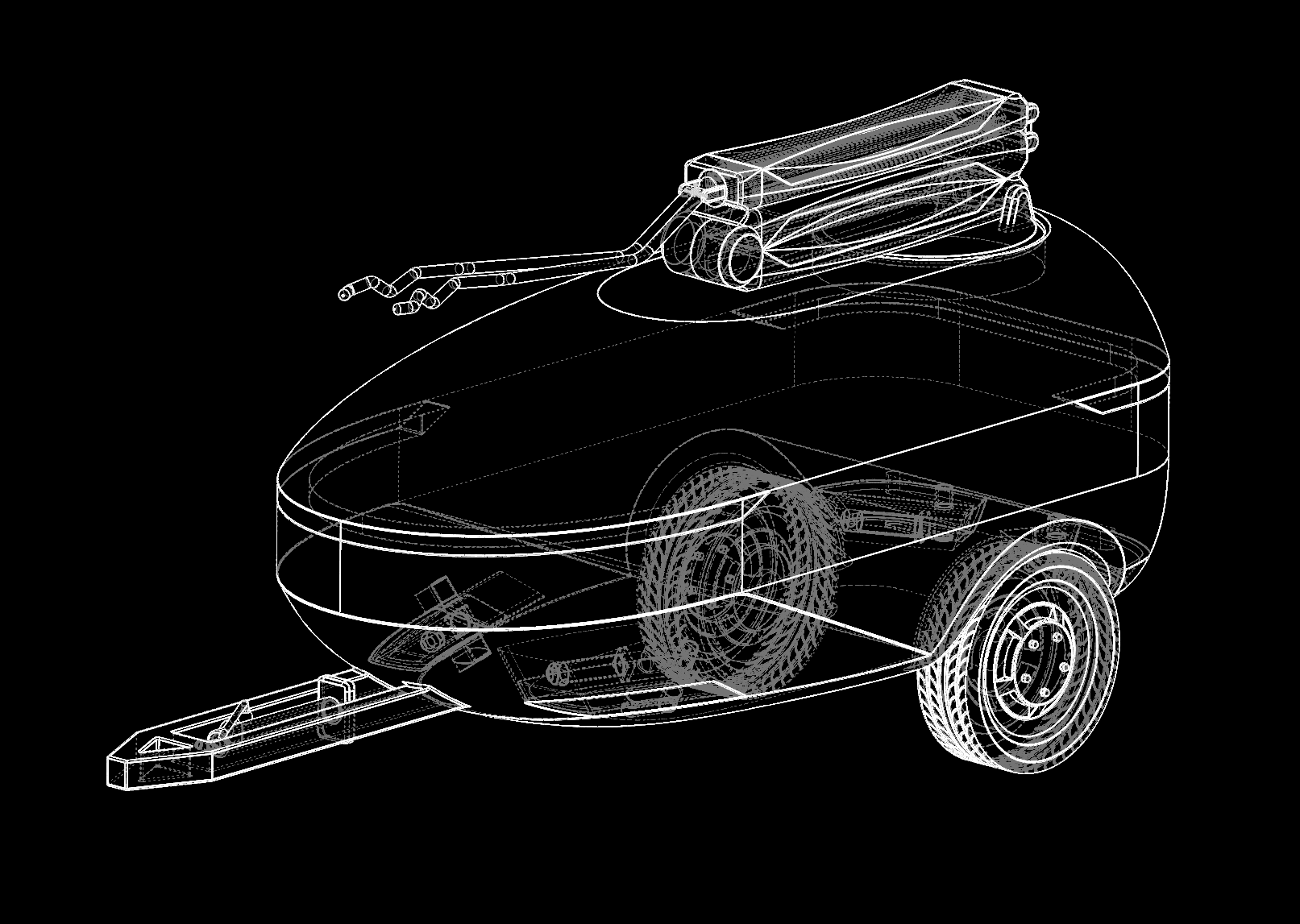


trailerable Design
Inspection Workflow
The drone completes the inspection before maintenance begins.
Outriggers
Arm Deploy
Bridge navigation
Drone Takeoff
The vehicle uses four main outriggers to stabilize the body during operation.
These supports prevent the vehicle from tipping while the drone is deployed.
A front manual outrigger can be hand-rotated to extend the support leg.
06. Incontext Design


Size difference


